Finding a dependable Plush Toy Creator is more than choosing the supplier with the brightest catalog. A cute product photo can hide uneven stitching, weak seams, or fabric that feels rough against a child’s skin. Reliable sourcing begins with careful questions, visible evidence, and patient comparison.
Look for a creator with a clear development process. Ask how they turn sketches into patterns, samples, and production-ready designs. Request close-up photos of embroidery, embroidered eyes, seams, stuffing, labels, and packaging. Better still, inspect a physical sample under natural light. Small details matter. A loose thread may reveal wider quality problems.
Experience also includes knowing what can go wrong. Confirm material specifications, color consistency, filling density, sample revisions, minimum order quantities, and realistic lead times. Ask how defects are recorded and corrected. Independent testing and traceable production records can strengthen confidence, but documents should be checked rather than accepted blindly. A professional creator should explain limitations clearly.
Do not rely on promises alone. Speak with recent customers when possible, compare written quotations, and keep design changes documented. Communication is evidence. Slow replies, vague answers, or pressure to approve an unfinished sample deserve attention.
Even careful buyers make mistakes. A low unit price can become expensive after revisions, delays, or rejected goods. The “best” Plush Toy Creator may not be the cheapest option. It should be the partner that protects design quality, communicates honestly, and delivers consistently. That standard takes time to verify. It is worth the effort.
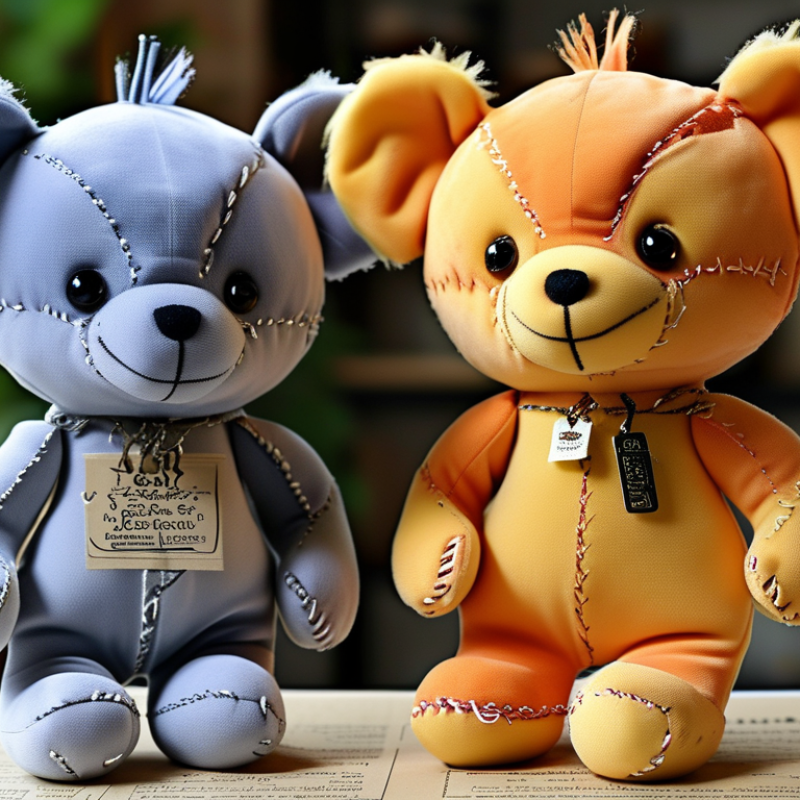
Define the product before comparing suppliers. Age determines construction risk. A plush toy for infants needs secure features, short fibers, washable materials, and no detachable parts. A collectible for older users may allow embroidery details, but its instructions and packaging must state the intended age clearly. The U.S. Consumer Product Safety Commission reported 188,400 emergency department visits linked to toy-related injuries among children under 15 in 2023. A soft surface does not mean low risk.
Use case matters just as much. Will children sleep with it, carry it outdoors, or wash it weekly? Each answer affects fabric strength, colorfastness, stuffing, seams, and labeling. Target markets also change testing requirements. A creator serving the United States should understand ASTM F963 and applicable consumer product rules. A creator serving Europe should review EN 71 requirements and local labeling expectations. Ask for test reports that match the final sample, not an earlier version. That mistake is common.
Tips: Prepare a one-page risk brief. Include age range, use case, materials, dimensions, washing method, target markets, and warning needs. Request sample photos, seam-pull results, and batch inspection records. Do not accept vague claims like “safe for children.” Reliable documentation is often less impressive than a beautiful prototype, but it protects the product. I still question any supplier who avoids discussing failure points.
A reliable plush toy creator should prove safety before discussing colors, embroidery, or production speed. Ask for current test reports covering ASTM F963 for the United States, EN 71 for Europe, and ISO 8124 for broader international markets. These standards examine mechanical hazards, flammability, migration of certain elements, and age-related risks. CPSIA rules also require controls for lead, phthalates, tracking labels, and children’s product certificates in the United States.
Look closely at the evidence. A trustworthy creator should provide sample identification, test dates, laboratory accreditation, and results matching the final fabric, stuffing, thread, eyes, and dyes. A report for a similar toy is not enough. Check small-part testing after seam pulling and repeated washing. Ask how production batches are traced. Details matter.
The U.S. Consumer Product Safety Commission’s 2023 Toy-Related Deaths and Injuries report recorded about 186,100 emergency-department-treated toy injuries among children under 15.
The European Commission’s 2023 Safety Gate report also listed toys among the most frequently notified product categories, showing why paperwork alone cannot replace physical testing.
My practical concern is simple: plush toys often change after approval. A softer fabric, heavier filling, or new accessory can alter results. I would request a pre-production sample and a finished-production sample for comparison. Mistakes still happen. A creator who welcomes retesting, documents corrective actions, and explains limitations demonstrates stronger professional judgment than one promising “100% safe” production.
How to Find a Reliable Plush Toy Creator?
A reliable plush toy creator treats material screening as a design requirement, not a final paperwork task. Under CPSIA requirements, accessible component parts must contain no more than 100 ppm total lead. Surface coatings have a stricter 90 ppm lead limit. Regulated phthalates must stay below 0.1% in applicable children’s products. These figures come from U.S. CPSC compliance guidance and 16 CFR testing requirements.
Ask for a component-level testing plan. Fabric, thread, printed details, plastic eyes, adhesives, and filling may need different evaluations. A clean fabric report proves very little if a painted button remains untested. CPSC laboratory guidance supports testing through accredited third-party facilities, commonly operating under ISO/IEC 17025 systems. Request laboratory accreditation, sample photographs, test methods, and report dates. Do not accept a certificate with only a product name.
Factory audits should trace each material to its supplier and production batch. The OECD Due Diligence Guidance also supports documented supply-chain checks and corrective actions. A serious creator can explain what happens after a failed result. Rework, segregation, retesting, or withdrawal should be written clearly. I have seen teams rely too heavily on old reports. That is a weakness. Material formulas can change quietly. Recheck after supplier changes, color changes, or new coatings. Small details matter.
A reliable plush toy creator should prove factory quality with measurable sampling, not polished photographs. ISO 2859-1:1999, Table 2-A, gives a practical benchmark for normal inspection. For a lot of 3,201–10,000 units, General Level II requires a 200-piece sample. At AQL 1.5, acceptance is seven defects and rejection is eight. At AQL 2.5, acceptance rises to ten and rejection to eleven. These figures are useful, but they are not a zero-defect promise.
Set AQL 1.5 for critical appearance or safety-related workmanship, such as exposed filling, sharp components, loose stitching, or detached eyes. Use AQL 2.5 for less serious cosmetic issues, including minor fabric marks or uneven embroidery. The factory should record lot size, code letter, sample numbers, defect photos, and corrective actions. Ask for signed inspection records, not a spreadsheet created after shipment. Short records reveal more.
The inspection must also connect with applicable toy-safety testing, such as ASTM F963-23 or EN 71, depending on the destination market. The U.S. Consumer Product Safety Commission’s 2023 reporting continues to show why traceability and corrective controls matter. A practical weakness remains: sampling can miss a hidden defect. I would therefore combine ISO sampling with needle checks, seam-strength tests, metal detection, and pre-production approval. A low AQL result can still hide poor process discipline. That deserves a second audit.
The chart shows standard sample sizes for normal inspection, single sampling, General Inspection Level II under ISO 2859-1. Larger production lots require larger random samples, helping buyers evaluate stitching, seams, stuffing, embroidery, labels, and other plush-toy quality characteristics without inspecting every unit.
| Lot Size | Sample Code | Sample Size | AQL 1.5 Ac / Re | AQL 2.5 Ac / Re |
|---|---|---|---|---|
| 501–1,200 | J | 80 | 3 / 4 | 5 / 6 |
| 1,201–3,200 | K | 125 | 5 / 6 | 7 / 8 |
| 3,201–10,000 | L | 200 | 7 / 8 | 10 / 11 |
| 10,001–35,000 | M | 315 | 10 / 11 | 14 / 15 |
| 35,001–150,000 | N | 500 | 14 / 15 | 21 / 22 |
Ac means accept the lot when the number of nonconforming units is at or below the limit. Re means reject the lot when the number reaches the rejection limit. AQL is a sampling-system parameter, not a guarantee that every accepted lot contains only that percentage of defects. Always confirm the applicable ISO 2859-1 edition, inspection level, defect classification, and sampling plan before an audit.
A reliable plush toy creator should prove quality with samples, clear contracts, and traceable records. Do not judge one sample alone. Request several units from different production batches. Check stitching, seam strength, stuffing consistency, loose fibers, odor, and wash performance. A soft toy may look perfect but fail after repeated handling.
Your contract should state the MOQ, approved materials, lead time, inspection points, and remedies for defects. Ask whether the MOQ changes by color, size, or fabric. Confirm production dates in writing, not through optimistic messages. The U.S. Consumer Product Safety Commission reported an estimated 231,700 toy-related emergency-room injuries in 2023. Testing is not decoration. Request reports covering flammability, physical and mechanical safety, restricted substances, and age grading under applicable standards such as ASTM F963 or EN 71. The European Commission’s 2023 Safety Gate report recorded 3,412 product alerts, showing why documented compliance matters.
Tips: Ask for a material list, test-lab accreditation, batch code, factory address, and shipment-level traceability. A good creator can connect each plush toy to fabric rolls, stuffing lots, operators, and inspection photos. Lead time should include testing and corrective work. Keep a buffer. I have seen schedules fail because testing was treated as an afterthought. That weakness deserves honest discussion before signing. A contract without sample approval is risky. A cheap MOQ can become expensive when defects arrive.
A practical comparison framework using anonymized supplier options. Figures are typical planning ranges for custom plush production and should be confirmed in the written quotation, approved sample, and signed contract.
| Evaluation Dimension | Option 1: Low MOQ | Option 2: Balanced Production | Option 3: Large-Scale Production | What to Verify Before Signing |
|---|---|---|---|---|
| Sample Development | 1 prototype included; additional revisions may cost US$30–80 each. | 1–2 prototype rounds included; digital pattern review available. | 1 prototype round included; physical revisions may require a production deposit. | Confirm the number of revisions, sample charges, shipping responsibility, and whether the final approved sample becomes the production reference. |
| Sample Accuracy | Shape and facial details generally close to the brief; higher variation risk in embroidery placement. | Better control of proportions, fabric color, stuffing density, and embroidery alignment. | Strong repeatability when the approved sample and technical pack are complete. | Check dimensions, seam placement, fabric hand-feel, color under daylight, stuffing firmness, and embroidered feature symmetry. |
| Minimum Order Quantity (MOQ) | Usually 100–300 pieces per design or color. | Usually 500–1,000 pieces per design or color. | Usually 2,000–5,000 pieces per design or color. | Confirm whether MOQ applies per style, size, color, fabric, or total order. Ask about mixed-color and mixed-size allowances. |
| Unit Price Structure | Approx. US$5–12 per piece for a basic 20–30 cm plush item, excluding shipping and testing. | Approx. US$3–8 per piece at moderate volume, depending on fabric, accessories, and packaging. | Approx. US$2–6 per piece at high volume for a standardized design, before freight and compliance costs. | Ensure the quote identifies fabric, filling, accessories, packaging, labels, testing, tooling, inspection, and shipping terms. |
| Prototype Lead Time | About 7–15 calendar days after receipt of artwork, specifications, and deposit. | About 10–20 calendar days, including pattern and material confirmation. | About 15–25 calendar days, especially for complex shapes or custom accessories. | Define when the clock starts, how revision days are counted, and the approval method for the final sample. |
| Bulk Production Lead Time | About 20–35 calendar days after sample approval and material confirmation. | About 30–45 calendar days after approval and deposit. | About 45–70 calendar days, including material planning and production scheduling. | Include a firm latest shipment date, delay notification procedure, acceptable delay allowance, and remedy for late delivery. |
| Material Documentation | Basic fabric and filling declarations may be available; supporting documents can vary by material batch. | Typically able to provide material composition, color references, and supplier declarations for key components. | More likely to maintain batch records, incoming inspection records, and standardized material specifications. | Request fiber content, filling composition, dye or color information, safety data where applicable, and batch or lot references. |
| Safety Testing | Third-party testing often arranged per order; budget approximately US$300–1,500 depending on market and test scope. | Can usually coordinate testing for mechanical, physical, flammability, and chemical requirements. | May have established testing procedures, but current reports still need to match the exact product and destination market. | Identify the target market first. Confirm the laboratory, test standard, sample identity, report date, and who pays for retesting after a design change. |
| Common Plush Safety Checks | Seam strength, small parts, pull force, accessible filling, sharp points, and flammability may require additional attention. | Standard checks can be incorporated into pre-shipment inspection and laboratory testing. | More formal quality checkpoints may be available, but large capacity does not replace product-specific testing. | For children's products, verify age grading and applicable requirements for the selling country. Do not rely only on a general factory certificate. |
| Traceability System | Often limited to purchase orders and production dates unless specifically requested. | Usually capable of recording material lots, production dates, inspection results, and carton quantities. | More likely to support batch-level records, line allocation, shipment cartons, and corrective-action reports. | Require a lot-code format linking raw materials, production dates, inspection records, cartons, and shipment documents. |
| In-Process Quality Control | Basic visual inspection; inspection frequency should be written into the purchase order. | Common checkpoints include fabric inspection, stuffing, embroidery, assembly, and final packing. | May use documented quality gates and statistical sampling, subject to contract confirmation. | Define inspection stages, sampling level, defect classification, acceptable quality limits, and the procedure for rework or replacement. |
| Defect Tolerance | Higher risk of inconsistent stitching, loose threads, uneven filling, or minor color variation. | More consistent when a sealed sample, measurement sheet, and defect photographs are attached to the contract. | Generally suitable for repeat orders with stable specifications and documented corrective actions. | Separate critical, major, and minor defects. State that safety-related defects and unauthorized substitutions are not acceptable. |
| Packaging and Labeling | Standard polybag and carton packaging; custom labels may require separate setup or minimum quantities. | Custom woven labels, hangtags, barcode stickers, and retail packaging are commonly available. | Better suited to multi-carton retail programs and standardized barcode or carton-marking requirements. | Approve artwork, label material, warning text, barcode format, carton dimensions, packing quantity, and packaging test needs. |
| Payment Terms | Common structure: 30% deposit and 70% before shipment. | Common structure: 30% deposit, balance after inspection and before shipment. | May negotiate staged payments tied to materials, production milestones, and final inspection. | Tie the final payment to passing inspection and receipt of required documents, not merely completion of packing. |
| Change Control | Design or material changes after approval can create significant cost and schedule impact. | Changes can usually be managed if documented before bulk production begins. | Formal change orders are more practical for repeat or high-volume programs. | Require written approval for any change to fabric, filling, accessories, dimensions, color, packaging, or manufacturing location. |
| Recommended Contract Evidence | Approved physical sample, signed quotation, artwork, measurement sheet, and basic inspection checklist. | Approved sample, technical specification sheet, test plan, quality standard, traceability plan, and delivery schedule. | Full technical pack, quality agreement, batch records, inspection plan, test reports, corrective-action process, and shipment documentation. | Every attachment should have a revision number and approval date. The contract should state which document controls if specifications conflict. |
| Selection guidance: Choose the option that can consistently reproduce the approved sample, meet the required MOQ and delivery window, provide product-specific safety evidence, and maintain traceable records. A low quoted price should not outweigh missing test documentation, unclear defect standards, or weak change-control terms. | ||||
Newsletter SignupUpcoming events, promo offers, member exclusives and more.
Golf Fanatics is a Chrysalis Enterprises Company owned by a group of like-minded individuals who share a common passion and affinity for golf, investing in successful Small-Medium-Enterprises, creating rewarding employment opportunities and being good industry participants and corporate citizens.
Monday
Tuesday
Wednesday
Thursday
Friday
Saturday
Sunday
9 a.m. – 10 p.m.
8 a.m. – 10 p.m.
8 a.m. – 10 p.m.
8 a.m. – 10 p.m.
8 a.m. – 11 p.m.
8 a.m. – 11 p.m.
8 a.m. – 9 p.m.
Copyright © 2025 · Golf Fanatics is a division of Chrysalis Golf Ventures Inc.
7100 15th St SE, Calgary AB
This site is protected by reCAPTCHA and the Google Privacy Policy and Terms of Service apply.
Need help? Call our support 24/7

Just a few things before you book…
While Toptracer Range technology and our automated ball dispensers are 99% reliable, there are rare instances when they do not function properly, especially during periods of inclement weather.
Please note that we do not guarantee the reliability of these services during any booking and will not provide you with a refund or credit if they do not function properly during your booking, therefore booking our services is fully at your discretion.
By booking our services, you acknowledge full responsibility for the cost of any intentional or unintentional damages to any Golf Fanatics or neighboring property and equipment caused by you or your guests during your booking.
You and your guests hereby agree to indemnify Golf Fanatics from any liabilities associated with any personal injury incurred by you or your guests during your booking.


