China Top 10 Golf Practice Equipment Suppliers

Choosing among China’s top 10 golf practice equipment suppliers takes more than comparing catalog prices. A hitting mat may look convincing online, yet thin turf, uneven backing, or loose seams can become obvious after repeated sessions. Buyers should review product range, material specifications, customization options, sample quality, production capacity, and communication. Small details matter. A stable putting cup, a sturdy net frame, and a mat that stays flat can improve everyday training. In The Little Red Book, respected golf instructor Harvey Penick offered a concise practice principle: “Take dead aim.” It is not a sourcing rule, but it points to why reliable equipment matters: practice tools should support repeatable swings, not distract from them.

This guide introduces ten suppliers and the considerations that can help buyers compare them. These include product consistency, available configurations, order requirements, and responsiveness to technical questions. Where possible, request samples and inspect stitching, frame joints, surface feel, and packaging before committing to larger orders. Test before scaling. A supplier’s product claims should be checked against the items received; a polished catalog alone is not proof of lasting performance. The list is a starting point, not a universal ranking. Needs differ between a home putting area, a commercial training facility, and a golf academy. Even careful comparisons leave room for uncertainty, so buyers should define their own performance requirements and verify them directly.
China Top 10 Golf Practice Equipment Suppliers

Define Golf Practice Equipment: Mats, Nets, Targets, Putting Aids, and Simulators

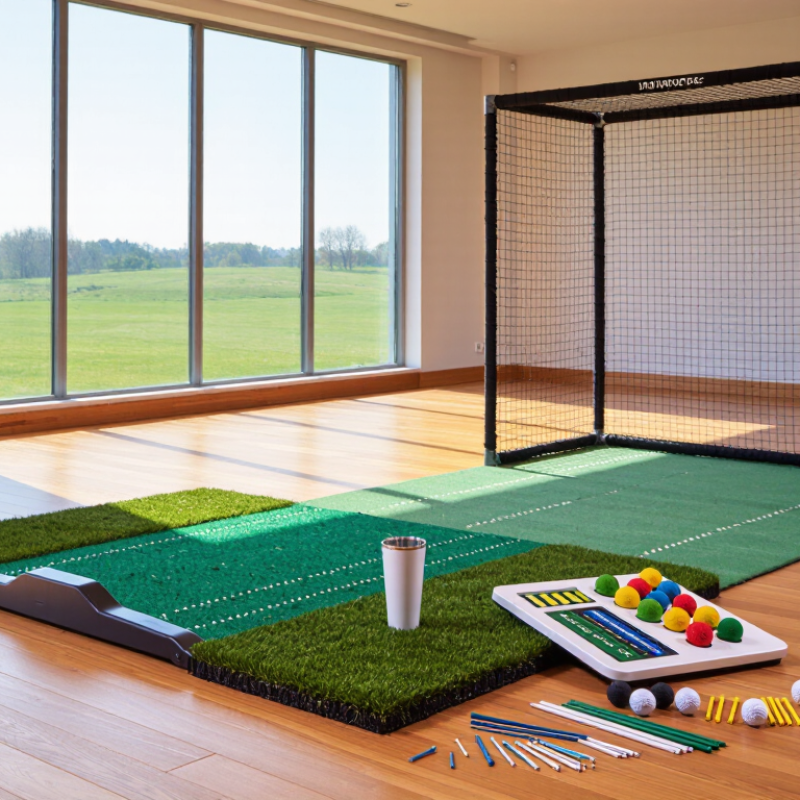
Golf practice equipment covers the tools used to rehearse full swings, short shots, and putting outside a course. Mats provide a stable hitting surface; nets contain shots, while targets help golfers judge direction and distance. Putting aids support alignment and pace control. Simulators combine impact sensors or cameras with software to display shot data and virtual courses. The National Golf Foundation’s 2024 participation update reported about 45 million U.S. golf participants in 2023, including off-course formats. That figure signals broad interest, but it does not measure equipment sales.

For suppliers, product fit matters more than a crowded feature list. A mat should stay flat and provide enough depth beneath the hitting area. Netting needs a secure frame and clear space behind it. Targets work best when their size and placement suit the available practice area. Putting aids should make face angle and start line easy to see. Simulators vary in sensor setup, software, and room requirements; buyers should check ceiling height and usable hitting distance. One limitation is easy to overlook: a forgiving mat may hide poor contact.

Tips: Check dimensions before ordering. Place a net away from windows and walkways. Test putting aids on the same surface you use at home. Ask suppliers for material, warranty, and replacement-part details.

Map China’s Top 10 Suppliers by Product Range and Manufacturing Role

A useful map of China’s top ten golf practice equipment suppliers begins with product range and manufacturing role, not an unverified ranking. Some factories specialize in hitting mats, with dense turf, layered backing, and replaceable inserts. Others produce artificial putting surfaces, where pile height and seam quality affect ball roll. Net makers supply impact-resistant mesh, while frame workshops fabricate steel or aluminum supports. These capabilities are distinct. A broad catalog does not always mean in-house production.

Other supplier profiles include practice-cage integrators, ball trays and collectors, rubber tees, swing-training aids, portable net-and-mat kits, and full-range OEM assemblers. The last group coordinates several components, but may outsource certain parts. That boundary can blur. A buyer comparing suppliers should ask which steps happen on site: cutting, welding, stitching, assembly, or final inspection. Requesting close-up production photos and a sample mat or net can reveal details that catalog images hide.

For a practical comparison, record each supplier’s core products, customization limits, and role in the supply chain. Check dimensions, material specifications, packaging, and replacement-part availability. Ask how the supplier tests seams, frame stability, and repeated ball impact. Answers should be specific, not merely reassuring. One limitation remains: supplier claims are not independent proof. Confirm details through samples, written specifications, and a clear inspection plan before placing a large order.

China Top 10 Golf Practice Equipment Suppliers - Map China’s Top 10 Suppliers by Product Range and Manufacturing Role

This anonymized market map ranks ten supplier categories by product specialization, not individual companies. Regional references indicate broad manufacturing capabilities in China; they do not verify that every listed product is made in every city. Confirm factory location, production processes, product specifications, and compliance documentation directly when sourcing.

No. Typical manufacturing cluster Supplier category Representative product range Primary manufacturing role Sourcing consideration
1 Guangdong and Zhejiang Practice net and frame makers Hitting nets, chipping nets, target panels, folding frames, replacement netting Cut-and-sew netting, metal-tube fabrication, frame assembly, and kit packing Check net dimensions, frame stability, and replacement-part availability.
2 Jiangsu and Zhejiang Golf mat and artificial-turf converters Hitting mats, stance mats, turf strips, tee-line mats, and practice-area flooring Turf or textile conversion, backing and bonding, trimming, and finished-mat assembly Request pile, backing, thickness, and wear specifications for the intended use.
3 Jiangsu and Zhejiang Putting-mat producers Roll-up putting mats, indoor practice greens, alignment markings, and cup accessories Surface-material conversion, printing or marking, edge finishing, and accessory bundling Compare rolling consistency and mat flatness after storage and shipment.
4 Zhejiang and Guangdong Golf training-aid manufacturers Alignment sticks, swing trainers, grip aids, tempo aids, and posture tools Plastic molding or metal-rod processing, component assembly, and consumer-product packaging Clarify materials, dimensions, and whether the design is custom or standard.
5 Guangdong and Zhejiang Ball-return and putting-accessory makers Ball-return tracks, practice cups, putting gates, and compact putting accessories Molded-part production, light mechanical assembly, and set packaging Test ball-return performance with the ball sizes and surfaces intended for use.
6 Jiangsu and Guangdong Impact-screen and enclosure suppliers Simulator impact screens, side barriers, enclosure curtains, and fabric components Technical-textile sourcing, cutting and sewing, edge finishing, and made-to-size production Specify screen dimensions, mounting method, and intended impact use.
7 Guangdong and Zhejiang Practice-equipment stands and hardware suppliers Ball trays, equipment holders, net brackets, mat bases, and simulator mounting hardware Metal fabrication, CNC or conventional machining, plastic-part sourcing, and assembly Confirm load requirements, corrosion protection, and compatibility with other components.
8 Zhejiang and Guangdong Small molded golf-accessory makers Practice tees, ball markers, brush holders, alignment components, and molded organizers Injection molding, color and finish control, simple assembly, and bulk packing Ask whether tooling is available for the requested shape, material, and order volume.
9 Fujian and Guangdong Sewn golf organizers and equipment bags Rangefinder pouches, accessory bags, practice-bag organizers, and equipment storage covers Fabric and trim sourcing, cutting and sewing, reinforcement, and finished-goods inspection Review fabric weight, stitching, closures, and pocket layout against a sample.
10 Zhejiang and Guangdong Rubber and flooring-component producers Rubber tee holders, anti-slip bases, protective pads, and modular practice-floor components Rubber or polymer compounding and molding, surface finishing, and component packing Verify material composition, odor, surface grip, and fit with the practice setup.

Apply USGA/R&A Ball Limits: Diameter ≥42.67 mm; Weight ≤45.93 g

For buyers comparing golf practice equipment suppliers, ball specifications deserve a close check. The USGA and R&A Equipment Rules set two key limits for conforming golf balls: diameter must be at least 42.67 mm, and weight must not exceed 45.93 g. These figures help buyers assess whether a ball is intended for play under the Rules, rather than relying on packaging claims alone. Ask suppliers for measured samples and a test record. A caliper and a calibrated scale can catch basic inconsistencies, though they do not replace formal testing.

Tips: Check a sample from each production batch. Record its diameter and weight. Confirm whether the product is designed for conforming play or for practice only.

Small differences matter. A ball below the minimum diameter or above the maximum weight does not meet these limits. The standard is stated in the USGA/R&A Equipment Rules, the governing technical reference for golf equipment. When comparing the top 10 suppliers, review their quality-control process, material consistency, and documentation alongside price. One overlooked detail: readings can vary with measurement technique, so specify the method before comparing results. That step is easy to miss.

Compare Practice Systems Using Ball Speed, Spin Rate, Launch Angle, and Carry Distance

When comparing golf practice systems, ask how they measure ball speed, spin rate, launch angle, and carry distance. These figures help reveal whether a setup supports useful feedback or merely displays numbers. Ball speed should respond consistently to contact quality, while spin readings can expose a thin strike or excessive sidespin. Small differences matter. Check the sensor placement and calibration instructions, especially in compact indoor bays where lighting, ceiling height, and hitting distance can affect readings. Use the same type of ball for each test. Otherwise, comparisons may be misleading.

Launch angle and carry distance add practical context to the data. A system that tracks both can help players see why a higher launch does not always produce more distance. Test several clubs, not just a driver, and record repeated shots rather than relying on one impressive result. Ask suppliers how their equipment handles mishits and whether users can export session reports. A clear display is helpful, but stable measurements matter more. I have seen practice sessions become less useful when readings changed after a minor setup adjustment. That is worth questioning. Compare results in similar conditions, note any gaps between simulated and outdoor shots, and check whether the software explains unusual spin or carry figures in plain language.

Assess Suppliers by Materials, Testing, Customization, and After-Sales Support

When comparing China’s top golf practice equipment suppliers, inspect materials before comparing unit prices. Check netting for UV resistance, seams for reinforced stitching, and mats for stable, non-slip backing. Ask for material specifications and batch records, not just attractive sample photos. National Golf Foundation reporting counted 47.2 million U.S. golf participants in 2023, including on-course and off-course players. That broad demand makes dependable practice gear important, but it does not prove any supplier’s quality.

Testing should match the product. Request documented checks for net impact resistance, mat thickness, color consistency, and packaging damage. For customization, confirm logo placement, dimensions, color samples, and minimum order quantities in writing. A sample can look excellent while mass production varies. No checklist catches everything. Ask how defects are recorded and what replacement process applies. After-sales support matters most when a shipment arrives with torn netting or uneven mat edges; confirm response times, spare-part availability, and who pays return freight.

Tips: Request a pre-shipment inspection and dated photos of packed goods. Compare the approved sample with production units under the same lighting. Keep one test piece for future reference. If a supplier avoids sharing basic test records, pause before paying a deposit. One limitation: written promises are not a substitute for independent inspection.

China Golf Practice Equipment Supplier Assessment

Suggested evaluation weights for comparing suppliers—not supplier-specific scores or a ranking.

Use these weights as a starting point when reviewing golf practice equipment suppliers. Check material specifications, request relevant test reports, confirm customization capabilities, and clarify warranty and after-sales terms before making a decision.

Go to Top